Pool Landscape Ideas Tailored to Houston’s Climate and Yards
If you’ve spent a Houston summer standing next to a pool with no shade, no place to sit comfortably, and a yard that floods every time it rains, you already know: a pool alone isn’t enough. The landscaping around it makes all the difference.
Pool landscape ideas that work in other parts of the country often fall flat here. Houston’s intense heat, heavy clay soil, high humidity, and Gulf Coast storm patterns demand a different approach — one that accounts for drainage, durability, and plants that can actually survive our summers without constant replacement.
At Danny’s Landscaping, we’ve spent over 30 years helping homeowners across Greater Houston create outdoor spaces that are as functional as they are beautiful. In this guide, we’re sharing the pool landscaping strategies that hold up in our climate — so your investment looks great and performs well, season after season.
[H2] Why Houston’s Climate Changes Everything About Pool Landscaping
A poolside design that works in Arizona or the Carolinas can fail quickly in Houston. Our region sits in USDA Hardiness Zones 9a and 9b, with summer temperatures regularly hitting 95°F or higher and humidity that makes it feel even hotter. That combination puts real stress on plants, materials, and hardscaping surfaces.
Then there’s the soil. Houston’s clay-heavy ground is notorious for expanding when wet and cracking when dry. Around a pool — where irrigation, splashing, and rain constantly change moisture levels — this can cause shifting in decking, cracking in pavers, and drainage problems that leave your pool area underwater after every significant storm.
Houston also sits in a region prone to tropical weather from June through November. Pool landscapes need to be designed with wind exposure, heavy rain events, and potential flooding in mind — not just aesthetics.
The good news: with the right plant selections, hardscaping materials, and drainage planning, a Houston pool landscape can be genuinely stunning and built to last.
Best Plants and Trees for Houston Pool Landscapes
Choosing the right plants around a pool in the Greater Houston area means balancing beauty with practicality. You want greenery and color, but not plants that drop excessive debris into the water, have invasive root systems, or fail to handle our heat and humidity.
Here are some of the best performers for Houston pool landscapes:
Ornamental Grasses Gulf muhly, pink muhly grass, and dwarf fountain grass add soft movement and year-round texture without creating maintenance headaches. They’re drought-tolerant once established and don’t shed much into pool water.
Tropical Accent Plants Elephant ears, bird of paradise, and tropical hibiscus thrive in Houston’s heat and add that resort-style look many homeowners want. They love humidity and can handle the reflected heat near a pool deck.
Palms Windmill palms, sago palms, and Mediterranean fan palms are well-suited to Houston’s climate and give any pool area a dramatic, polished look. They’re relatively low-litter and root systems are manageable near hardscaping.
Crape Myrtles A Houston staple for good reason — crape myrtles provide summer color, moderate shade, and excellent heat tolerance. Keep them trimmed appropriately and they’re one of the cleanest trees you can plant near a pool.
Bougainvillea Dramatic color, tough as nails in Houston’s heat, and stunning against a fence or pergola near a pool. It does need room to grow, so plan accordingly.
What to Avoid Avoid trees with aggressive surface roots (like silver maples or certain oaks in confined spaces), plants that shed heavily, and anything that attracts bees in large numbers right at pool’s edge. We also generally steer clients away from plants with thorns or spines in areas where barefoot traffic is common.
Homeowners near the Cinco Ranch and First Colony communities often lean toward low-maintenance tropical combinations that handle the humidity while keeping the look clean and modern. In neighborhoods like Memorial and Tanglewood, larger specimen palms and formal hedging create a more structured, estate-style feel.
Hardscaping, Decking, and Layout Considerations for Houston Pools
The surfaces around your pool are just as important as the plants — maybe more so in Houston, where the right materials can mean the difference between a comfortable, safe pool area and one that’s slippery, cracked, or flooded.
Choose the Right Decking Material Concrete is common, but in Houston’s heat, it can become uncomfortably hot underfoot and is prone to cracking with clay soil movement. Better options for our climate include:
- Travertine or natural stone pavers — naturally cooler underfoot, slip-resistant, and beautiful
- Exposed aggregate concrete — textured surface reduces slip risk and handles Houston’s freeze-thaw cycles (rare but real)
- Porcelain tile pavers — durable, low-maintenance, and available in styles that mimic natural stone
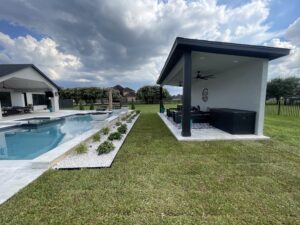
Shade Structures Are Essential In the Houston area, a pool without shade is a pool that’s hard to use during peak afternoon hours from May through September. Pergolas, shade sails, and covered patio additions adjacent to the pool area dramatically expand usability. We regularly design and install pergolas for clients along the I-10 corridor and throughout communities like Bridgeland and Towne Lake where outdoor living is a priority.
Plan Your Layout for Traffic Flow Good pool landscape design accounts for how people actually move around the space — from the house to the pool, from the pool to the grill or outdoor kitchen, and back inside. Defined pathways in flagstone or pavers prevent grass from being worn down and keep the space looking intentional.
Outdoor Lighting Landscape lighting around a pool extends usability into the evening hours, adds safety, and creates beautiful ambiance. Uplighting around palms, path lighting along walkways, and subtle in-ground or low-voltage lighting in planting beds transforms a pool area after dark.
Drainage: The Most Important — and Most Overlooked — Pool Landscape Factor in Houston
If there’s one area where Houston homeowners consistently underinvest, it’s drainage around pool areas. And it’s the one issue that causes the most frustration after installation.
Houston’s flat topography and clay-heavy soil mean water has nowhere to go quickly. Add a pool deck, surrounding hardscaping, and planting areas, and you’ve created a situation where improper grading can leave your pool equipment area, outdoor seating, or adjacent lawn sitting in standing water after a significant rain.
Homeowners near Barker Reservoir and along the Katy Freeway corridor know this challenge better than most — the area has seen its share of major flooding events, and even moderate storms can tax a property’s drainage if it hasn’t been properly graded.
Effective drainage solutions for pool landscapes include:
- Proper grading to direct water away from the pool structure and hardscaping
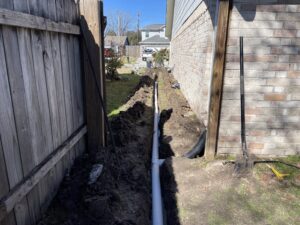
- French drains routed to a street, easement, or drainage swale
- Channel drains built into pool deck areas to capture and redirect surface water
- Dry creek beds that function as both a drainage feature and a landscape design element
We assess drainage carefully on every pool landscape project — because even the most beautiful planting scheme won’t hold up if water is pooling in the wrong places after every Houston rainstorm.
[H2] When It’s Worth Calling a Professional for Pool Landscaping in Houston
Plenty of homeowners start with the best intentions when it comes to pool landscaping — and run into challenges that are genuinely difficult to solve without experience in Houston’s specific conditions.
Drainage miscalculations, plants that looked great at the nursery but don’t perform near a pool, hardscaping that shifts or settles in our clay soil, pergola installations that aren’t rated for wind exposure — these are the kinds of issues we see regularly when we’re called in to help with a project that didn’t go as planned.
Working with a licensed, experienced landscaping team from the start typically saves time, money, and a lot of frustration. We bring in-house design capabilities — including 2D and 3D design — so clients from Pearland to The Woodlands, and from Cypress to League City, can see how their pool landscape will look before a single plant goes in the ground.
Our four-step process — consultation, design, installation, and final walkthrough — keeps everything transparent, and our quotes are itemized so there are no surprises.
If you’re planning a pool landscape project or want to improve an existing one, we’re happy to take a look and share what we think would work well for your property.
[CTA BLOCK]
Whether you’re starting from scratch or looking to upgrade the space around an existing pool, Danny’s Landscaping brings 30+ years of experience designing and installing outdoor spaces built for Houston’s climate. From Katy and Sugar Land to Kingwood and Friendswood, we’ve worked on properties across Greater Houston and understand what holds up here — and what doesn’t. Reach out for a free consultation and estimate, and let’s talk through what’s possible for your yard. Call or text us at (713) 514-3537.
[FAQ SECTION]
Q: What plants are best for landscaping around a pool in Houston? A: In Houston’s heat and humidity, top performers for pool landscapes include ornamental grasses like Gulf muhly, tropical accent plants like elephant ears and bird of paradise, palms such as windmill or sago, and crape myrtles for color and shade. The key is choosing plants that handle reflected heat, don’t shed heavily into pool water, and won’t develop invasive root systems near your hardscaping or pool structure.
Q: How do I prevent flooding around my pool area in Houston? A: Proper grading and drainage planning are essential in Houston, where flat topography and clay soil can cause water to pool quickly after rain. Solutions include grading the surrounding area to direct runoff away from the pool deck, installing French drains or channel drains, and in some cases incorporating dry creek beds that handle overflow while adding a design element. A professional assessment before installation will identify the best approach for your specific yard.
Q: What kind of pool deck material works best in the Houston heat? A: Natural stone pavers like travertine and porcelain tile pavers are popular choices in the Houston area because they stay cooler underfoot than traditional concrete, offer good slip resistance when wet, and hold up well to our climate’s temperature swings. Exposed aggregate concrete is another solid option. Standard broom-finished concrete can become uncomfortably hot and is more prone to cracking with Houston’s clay soil movement over time.
Q: How much does pool landscaping cost in Houston? A: Pool landscaping costs in the Greater Houston area vary widely depending on the size of the space, the complexity of the design, materials chosen, and whether drainage work is needed. A simple plant installation and mulching project is priced differently from a full hardscaping, lighting, pergola, and plant installation package. The best way to get an accurate number is through a free on-site estimate — every property is different, and pricing should reflect your specific yard and goals.
Q: Do I need a permit for pool landscaping in Houston? A: Most planting and general landscaping work around a pool doesn’t require a permit in the Houston area. However, structures like pergolas, shade structures, and certain drainage improvements may require permits depending on your municipality or HOA rules. A professional landscaping company familiar with Greater Houston’s permitting landscape can help you understand what applies to your project before work begins.