Houston Lawn Care Calendar: Your Month-by-Month Guide to a Healthy Yard
If you’ve lived in Houston for any length of time, you already know that our lawns don’t follow a typical calendar. While homeowners in cooler climates are still buried in snow, Houston yards are waking up — and if you’re not ready, your lawn will show it. Between the intense summer heat, Gulf Coast humidity, clay-heavy soil, and the occasional tropical storm, keeping a lawn healthy here requires a seasonal approach that’s built specifically for Greater Houston’s environment.
At Danny’s Landscaping, we’ve been caring for Houston-area properties for over 30 years, and we’ve learned that the most beautiful lawns aren’t accidents — they’re the result of the right work done at the right time of year. This Houston lawn care calendar walks you through what to do, month by month, to keep your yard in strong shape all year long.
Why Houston’s Climate Demands a Different Lawn Care Strategy
Most lawn care advice you’ll find online is written for temperate climates — not for a subtropical environment where August temperatures regularly climb past 95°F and summer thunderstorms can dump several inches of rain in a matter of hours. Houston sits in USDA Hardiness Zones 9a and 9b, which means mild winters, early springs, and an extended growing season that’s a blessing and a challenge at the same time.
The predominant grass types in Greater Houston — St. Augustine, Bermuda, Zoysia, and Centipede — each have their own seasonal rhythms. What works for a Bermuda lawn in Katy may not be right for a St. Augustine lawn closer to Pearland or League City. On top of grass variety, Houston’s notorious clay-heavy soil holds moisture for extended periods after rain, which can lead to fungal disease if mowing, watering, and fertilizing are done on the wrong schedule.
Understanding these local conditions is the foundation of everything else in this calendar.
Houston Lawn Care Calendar: Month-by-Month Breakdown
January – February: Rest and Preparation
Winter in Houston is mild compared to the rest of the country, but cool-season dormancy is real. During these months, your warm-season grass is resting — and that’s a good thing. Resist the urge to fertilize or push growth. Instead, use this time to:
- Sharpen mower blades so you’re ready for spring
- Address drainage issues in low-lying areas of your yard before spring rains arrive
- Apply pre-emergent weed control in late February, especially in areas like Cypress and The Woodlands where winter weeds tend to take hold early
- Inspect and service irrigation systems so repairs are done before the heat arrives
- Consider adding mulch to garden beds to protect root systems from any remaining cold nights
March – April: Spring Wake-Up
This is arguably the most important window of the year. Houston lawns begin actively growing again, and what you do now sets the tone for the entire season.
- Begin mowing once your grass reaches its recommended height — typically around 3 to 3.5 inches for St. Augustine
- Apply a balanced, slow-release fertilizer once nighttime temperatures consistently stay above 55°F
- This is a good time to overseed thin or bare spots before the heat makes establishment difficult
- Scout for chinch bugs and brown patch disease, both of which are common in Greater Houston lawns
- If you’ve been considering sod installation or a lawn renovation, spring is the ideal window to get started — grass roots establish well in moderate temperatures before the summer stress begins
May – June: Ramp Up Irrigation and Monitor for Stress
As temperatures rise, your lawn’s water demand climbs significantly. This is particularly true for properties along the I-10 Katy Freeway corridor and in areas like Sugar Land and Missouri City, where the combination of heat and clay soil creates uneven drainage patterns.
- Deep, infrequent watering is the goal — roughly one inch of water per week, adjusted for rainfall
- Set irrigation systems to water in the early morning hours to minimize evaporation and reduce fungal risk
- Apply a second round of fertilizer in late May or early June
- Keep mowing at a consistent height — scalping your lawn in summer heat invites stress and weed pressure
- Watch for signs of Take-All Root Rot, a fungal disease that thrives in Houston’s warm, wet conditions
July – August: Survive the Heat
This is survival season for Houston lawns. Daytime temperatures regularly exceed 95°F, and even drought-tolerant grasses can struggle when weeks pass without meaningful rain.
- Raise your mowing height slightly in peak heat — taller grass shades the soil and retains moisture better
- Avoid fertilizing during the hottest weeks of summer; nitrogen during heat stress can burn lawns
- Water deeply and consistently; shallow watering encourages shallow roots that are more vulnerable to heat
- If you notice dry, straw-colored patches, check your irrigation heads for coverage gaps — this is one of the most common calls we receive from homeowners in Friendswood and Pearland during August
- Hold off on any major landscape installations until temperatures moderate in fall
September – October: Fall Recovery and Preparation
Fall is Houston’s second major growing window, and it’s a fantastic time for lawn repair and improvement projects. Temperatures become more forgiving, and grass roots that were stressed by summer heat begin to recover.
- Apply a fall fertilizer with a higher potassium ratio to strengthen roots heading into winter
- September and October are excellent months for sod installation — roots establish well before the ground cools
- If your yard has drainage challenges that showed up during summer storms near areas like Barker Reservoir or along Brays Bayou, now is the time to address grading or add drainage solutions before next rainy season
- Core aeration in early fall can dramatically improve compacted Houston clay soils and help water and nutrients reach grass roots more effectively
- Overseed Bermuda lawns if thinning has occurred over the summer
November – December: Wind Down and Winterize
Houston winters rarely bring prolonged freezing temperatures, but a hard freeze can damage St. Augustine lawns that haven’t been properly prepared.
- Apply a final light fertilizer application in early November to support root health through dormancy
- Pull back irrigation frequency as temperatures drop and grass growth slows
- Clean up leaves and debris from garden beds and lawn surfaces to prevent mold and disease
- Shut down and winterize irrigation systems if a significant freeze is forecast — even brief hard freezes can damage above-ground components
- Late November through December is a great time to consult with a landscaper about design changes, hardscaping additions, or landscape renovations you’d like to complete in the spring
When to Call a Professional Landscaper in Houston
There are tasks on this calendar that every homeowner can handle on their own — consistent mowing, basic watering, seasonal clean-ups. But some lawn challenges in Houston’s unique environment benefit significantly from professional expertise.
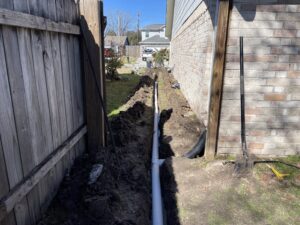
Drainage problems are one of the most common issues we address across Greater Houston. Whether you’re in a neighborhood like Meyerland near Buffalo Bayou, in Cinco Ranch, or anywhere in between, Houston’s flat topography and clay soil mean that standing water is a regular problem for many properties. Identifying the right grading and drainage solution requires an experienced eye and often specialized equipment.
Irrigation system installation, repair, and seasonal calibration is another area where professional help pays off quickly — a poorly calibrated system wastes water and creates exactly the conditions that invite fungal disease.
And when it comes to sod installation, lawn renovations, or large-scale seasonal maintenance planning, having a team that knows Houston’s specific grass varieties, soil types, and microclimates makes a meaningful difference in the outcome.
At Danny’s Landscaping, we’ve been working with Houston homeowners and commercial property managers for over 30 years. We know what Greater Houston lawns need, season by season, and we’re happy to take a look at your property and share what we think would help most.
Get your free estimate by calling (713) 514-3537 or reaching out at da***@*****************tx.com.
[INTERNAL LINK: Danny’s Landscaping Lawn Care & Maintenance Services page] [INTERNAL LINK: Irrigation Systems & Repair page] [INTERNAL LINK: Drainage Solutions & Grading page]
[CTA BLOCK]
Whether you’re in The Woodlands, Sugar Land, Katy, or right in the heart of Houston, Danny’s Landscaping is ready to help you build a lawn care plan that actually works for your property. We offer free consultations and no-surprise, itemized estimates so you always know exactly what’s involved before any work begins. Give us a call or send a text at (713) 514-3537 — we’d love to take a look and help you get your yard on the right track.
[FAQ SECTION]
Q: When should I fertilize my lawn in Houston, TX? A: For warm-season grasses like St. Augustine or Bermuda, the first fertilizer application in Houston is typically in late March or early April, once nighttime temperatures consistently stay above 55°F. A second application in late May or early June is common, followed by a fall application in October. Avoid fertilizing during the peak heat of July and August, as this can stress and burn your lawn.
Q: What grass type is best for Houston lawns? A: St. Augustine is the most widely used grass in Greater Houston because it handles the heat, humidity, and partial shade that many Houston yards have. Bermuda is a strong choice for full-sun lawns with high traffic, and Zoysia offers a good middle ground of durability and appearance. The right choice depends on your yard’s sun exposure, soil conditions, and how much maintenance you want to take on.
Q: How often should I water my lawn in Houston during summer? A: During Houston’s summer months, most lawns need approximately one inch of water per week. Deep, infrequent watering — two to three times per week rather than daily shallow watering — encourages deeper root growth that’s more resilient in heat. Water in the early morning to reduce evaporation and limit the moisture on grass blades overnight, which can contribute to fungal disease.
Q: Why does my Houston lawn have brown patches in summer? A: Brown patches in Houston lawns during summer are most commonly caused by fungal disease (particularly Brown Patch or Take-All Root Rot), irrigation coverage gaps, chinch bug damage, or heat stress. Each cause has a different treatment, so it’s worth having a professional take a look before applying any product. Brown, straw-colored patches that expand quickly are often fungal; irregular dry spots near irrigation heads frequently indicate coverage issues.
Q: Is fall a good time for sod installation in Houston? A: Yes — September and October are excellent months for sod installation in Greater Houston. Temperatures are more moderate than summer, root establishment is strong before the ground cools in winter, and the grass has time to anchor before the following spring growing season. Spring is also a strong window for sod installation, making those two seasons the preferred times for most Houston lawn renovation projects.