Preparing Your Houston Landscape for Hurricane Season
Every June, Greater Houston homeowners face the same reality: hurricane season is here, and your yard is either ready for it — or it isn’t. From Katy to Kingwood, the Gulf Coast’s combination of saturated clay soil, powerful storms, and relentless summer heat puts serious demands on even a well-maintained landscape. A few smart steps taken before the season peaks can mean the difference between a yard that bounces back quickly and one that takes months to recover. In this guide, Danny’s Landscaping — family-owned and serving Greater Houston for over 30 years — walks you through what to do now to protect your trees, lawn, drainage, and hardscaping before the storms arrive.
Why Houston Landscapes Need Special Hurricane Preparation
Houston’s landscape faces a set of challenges that most of the country simply doesn’t deal with. Our USDA Zone 9a/9b subtropical climate means plants grow vigorously — but that same lush growth creates risk when 80+ mph winds arrive. Trees with dense canopies act like sails in high winds. Root systems weakened by drought-stress early in summer may not hold once the ground becomes waterlogged mid-storm.
Then there’s Houston’s clay-heavy soil. When saturated — which happens fast during a tropical event — it offers dramatically less structural support to tree root systems. Combine that with the flat topography across Harris County and surrounding areas, and it becomes clear why standing water, toppled trees, and erosion are such common post-storm issues here.
Proper landscape preparation isn’t just about aesthetics. It’s about protecting your property, your structures, and the investment you’ve made in your outdoor space.
Houston-Specific Storm Risks: What the Local Environment Tells Us
Homeowners along the Katy Freeway corridor and near Barker and Addicks Reservoirs know firsthand how quickly water accumulates during a significant storm. The Buffalo Bayou and Brays Bayou systems — while designed to manage runoff — can overwhelm quickly under tropical rainfall rates, which routinely exceed 10 inches in 24 hours during major events.
In neighborhoods like Meyerland and areas around Brays Bayou, poor yard drainage doesn’t just mean a soggy lawn — it means structural risk to foundations and hardscaping. In Sugar Land, Pearland, and Missouri City, the combination of newer developments and expansive clay soils means that even moderate storms can expose grading and drainage problems that weren’t visible before.
Further north in The Woodlands, Conroe, and Kingwood, mature tree canopies are a major asset — but they require ongoing maintenance to remain an asset rather than a liability. A large, overgrown live oak with crossing limbs and a dense canopy presents real risk during a tropical storm, no matter how beautiful it looks in June.
Understanding your specific micro-environment — your soil drainage, existing tree health, grading, and proximity to the bayou system — is the first step to meaningful preparation.
A Practical Pre-Hurricane Season Landscape Checklist
Work through these steps before June is over each year:
- Assess and Prune Your Trees Have large trees evaluated by an experienced professional. Look for dead or dying limbs, crossing branches, split crotches, and trees with heavy one-sided canopy growth. Proper crown thinning reduces wind resistance significantly — but it’s a job that requires skill. Incorrect pruning can actually increase storm damage risk. Focus especially on trees near your home, fence lines, and utility lines.
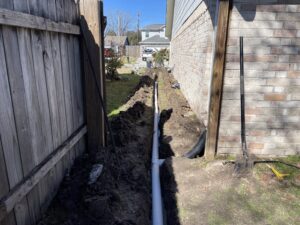
- Inspect Your Drainage and Grading Walk your yard after a normal rainstorm. If water pools near your foundation, along fence lines, or in the middle of your lawn for more than a few hours, you likely have a grading or drainage issue that a major storm will make much worse. French drains, surface grading corrections, and dry creek beds are all practical solutions that can be installed before the season peaks.
- Secure or Remove Loose Landscape Features Decorative boulders, lightweight planters, garden ornaments, and outdoor furniture become projectiles in high winds. Before a storm, bring in or securely anchor anything that can move. For permanent landscape features like pergolas, arbors, and fence sections, inspect connections and fasteners now while conditions are calm.
- Mulch — But Not Too Much A 2–3 inch layer of quality mulch helps retain moisture, moderate soil temperature, and reduce erosion during heavy rain. Too much mulch — especially piled against tree trunks or structures — can trap moisture and create problems. Refresh mulch in planting beds before the season but keep it away from tree bases.
- Evaluate Your Irrigation System After a major storm, your irrigation system is often the last thing on your mind — until you realize a valve was damaged or a controller was shorted out. Have your system inspected and serviced before the season so you’re not dealing with a repair during the heat of August or September. Also ensure your system has a rain shutoff sensor so it doesn’t run during or immediately after a storm.
- Reinforce or Repair Hardscaping Loose pavers, cracked retaining walls, and unstable edging can shift significantly under storm conditions. Address any existing damage to patios, walkways, and retaining structures before a storm puts additional stress on them.
- Know Your Plants Some plants handle storms better than others. Native and adapted species like Anacacho Orchid Tree, Texas Sage, Esperanza, and established ornamental grasses tend to be resilient in Houston conditions. Tropicals with large, soft leaves — while beautiful — are more likely to sustain damage. After a storm, avoid removing plants too hastily; many will recover once conditions improve.
When to Call a Professional Before Hurricane Season
Some landscape tasks are straightforward DIY work. Others — especially anything involving large trees, drainage design, or structural repairs — genuinely benefit from professional assessment and execution.
Tree work is the clearest example. An improperly pruned tree may look fine until a 70-mph wind reveals the structural problem that was created. Drainage design requires understanding your entire yard’s grading and how water moves across it — not just where it sits. And hardscaping repairs done incorrectly before a storm can fail under the very conditions they were meant to withstand.
At Danny’s Landscaping, we’ve been preparing Houston yards for hurricane season for over 30 years. We serve homeowners from Cypress and Tomball down through the Energy Corridor and into Pearland and League City — and we understand how differently each area behaves during a major rain event. Whether you’re near Memorial Park dealing with mature tree concerns or in Cinco Ranch managing drainage across a newer lot, our team provides a thorough, honest assessment and a clear, itemized plan.
We’re not here to upsell you on work you don’t need. We’re here to help you protect what you’ve built.
Schedule your free consultation today — we’re happy to take a look before the season gets serious.
📞 (713) 514-3537
[INTERNAL LINK: Danny’s Landscaping Drainage Solutions & Tree Services pages]
[CTA BLOCK]
Hurricane season in Greater Houston is not something to prepare for after the fact. Whether you’re in Sugar Land, Spring, Humble, or anywhere in between, a pre-season landscape assessment from Danny’s Landscaping gives you a clear picture of where your yard stands — and what, if anything, needs attention. We’ve been doing this work across Houston for more than 30 years, and we back every project with our transparent process, honest pricing, and genuine commitment to your property. Call us today at (713) 514-3537 to schedule your free consultation.
[FAQ SECTION]
Q: How do I prepare my trees for hurricane season in Houston? A: Start with a professional inspection of any large trees on your property, especially those near your home or fence lines. Look for dead limbs, dense canopy growth, and structural weaknesses. Crown thinning by an experienced landscaper can significantly reduce wind resistance and lower the risk of branch failure during a storm.
Q: What should I do with my yard before a hurricane hits Houston? A: Trim overgrown trees and shrubs, clear gutters and drainage pathways, bring in or secure loose landscape items, and check that your yard’s grading is directing water away from your foundation. If you have a known drainage issue, address it before storm season rather than after.
Q: Does Houston clay soil make storm damage worse? A: Yes — Houston’s heavy clay soil saturates quickly during tropical rainfall, which reduces its ability to support tree root systems and dramatically slows drainage. This is why proper grading and drainage infrastructure are so important, particularly in low-lying areas of Harris County and surrounding communities.
Q: How much does pre-hurricane landscape prep cost in Houston? A: Costs vary widely depending on the scope of work — from a simple tree trim to a full drainage correction project. Danny’s Landscaping offers free consultations and provides clear, itemized estimates so you understand exactly what’s involved before any work begins. Call (713) 514-3537 to get started.
Q: Should I remove trees near my house before hurricane season? A: Not necessarily. Many trees can be preserved with proper pruning and structural evaluation. Removal is sometimes the right call — particularly for dead, severely damaged, or poorly positioned trees — but a professional assessment will help you make that decision based on the actual condition and risk level of the specific tree.