How to Fix Thin or Patchy Lawns in Houston’s Hot Summers
If you’ve walked your backyard this summer and noticed bare spots, thinning grass, or patchy areas that just won’t bounce back — you’re not alone. Houston homeowners deal with this every year, and the culprits aren’t always obvious. Between our relentless summer heat, clay-heavy soil that compacts under foot traffic, and the occasional drought that bakes lawns well past their limit, fixing a thin or patchy lawn in Houston takes more than just throwing down some seed and hoping for the best.
At Danny’s Landscaping, we’ve been helping Greater Houston families and businesses restore and maintain healthy lawns for over 30 years. Whether you’re in Katy, Pearland, or closer to the Memorial area, the approach to a full, green lawn starts with understanding what’s actually causing the problem — and then addressing it the right way for our specific climate.
Why Houston Lawns Thin Out: Understanding the Root Causes
Before you can fix a patchy lawn, you need to understand why it’s struggling in the first place. In Houston, thin or bare areas are rarely just one issue — they’re usually the result of a combination of stressors that build up over time.
Compacted Clay Soil Houston’s soil is notoriously dense. That heavy clay makeup holds water after rains but becomes rock-hard during dry spells, making it nearly impossible for grass roots to penetrate deeply. Shallow roots mean less drought tolerance and thin turf that can’t recover from summer stress.
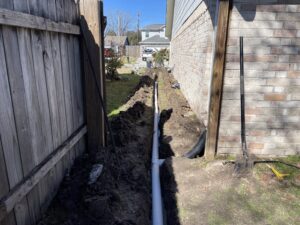
Poor Drainage Standing water — even brief pooling after a storm — can suffocate grass roots and create dead zones. Houston’s flat topography and the flooding tendencies near areas like Brays Bayou and Barker Reservoir mean drainage is a real concern for many homeowners. Lawns in low-lying areas of neighborhoods like Meyerland and Missouri City often show patchy turf directly tied to poor grading or drainage.
Shade and Foot Traffic Heavy shade from mature trees combined with regular foot traffic is a double blow. Grass can’t photosynthesize properly in deep shade, and compaction from kids, pets, and everyday use makes recovery even harder.
Wrong Grass Species Not every grass variety is suited for Houston’s USDA Zone 9a/9b subtropical climate. St. Augustine, Bermuda, and Zoysia are the primary performers here — using a cool-season grass or an unsuitable variety in the wrong sun conditions leads to predictable failure.
Fungal Disease and Grubs Houston’s combination of summer heat and humidity creates ideal conditions for lawn fungal diseases like brown patch and take-all root rot. Grub damage from beetles can also cause irregular dead patches that look similar to drought stress but won’t respond to watering.
Houston’s Climate Makes Lawn Recovery More Challenging
Houston summers are no joke. Average high temperatures push well above 90°F from June through September, with humidity levels that make it feel even hotter — and that same humidity can work against your lawn if moisture management isn’t right.
Unlike lawns in drier climates, Houston turf faces a dual challenge: surviving intense heat and sun while also managing the risk of fungal disease from muggy conditions and unpredictable rainfall. The stretch from Cypress and Tomball in the northwest down to League City and Friendswood near the coast all experience these same conditions, though drainage challenges can vary significantly based on proximity to bayous and local topography.
Houston’s hurricane season (June through November) adds another layer of complexity. A heavy tropical event can dump several inches of rain in hours, waterlogging already saturated clay soils and smothering weakened turf. The following weeks of heat and humidity then create prime conditions for fungal outbreaks on already-stressed grass.
The I-10 corridor from the Energy Corridor toward Katy and the TX-99 Grand Parkway communities are among the fastest-growing areas in Greater Houston — and newer developments there frequently see patchy lawns during establishment because grading, drainage, and soil amendments weren’t fully addressed during construction.
Understanding this environment is the foundation of effective lawn recovery. Solutions that work in Dallas or San Antonio may not work the same way here.
How to Fix a Thin or Patchy Houston Lawn: Step-by-Step
Here’s a practical approach to diagnosing and restoring your lawn this season.
Step 1: Identify the Problem Before You Treat It Walk the patchy areas and observe. Is the soil hard and dry? That’s compaction. Is it soggy or discolored? Drainage or fungus. Are the bare spots irregular and scattered? Consider grubs or disease. Are they in shaded areas? Grass variety or light may be the issue. Treating for the wrong cause wastes time and money.
Step 2: Address Soil Compaction with Aeration For clay-heavy Houston soils, core aeration is one of the most effective tools available. A core aerator pulls small plugs from the soil, creating channels for air, water, and nutrients to reach the root zone. Follow aeration with a topdressing of quality compost or a sand-compost blend to begin improving soil structure over time.
Step 3: Test and Amend Your Soil A basic soil test will tell you pH levels and nutrient deficiencies. Houston soils often run alkaline, which can lock out key nutrients. Adjusting pH with the right amendments and applying a balanced fertilizer appropriate for your grass type will make a significant difference in recovery speed.
Step 4: Overseed or Re-Sod the Bare Areas In Houston, most warm-season grasses don’t respond well to traditional overseeding the way northern lawns do. For St. Augustine — the most common Houston lawn grass — you’ll need to plug or sod the bare areas since it doesn’t produce viable seed. Bermuda and Zoysia can be sprigged or seeded. Timing matters: late spring through early summer is generally the best window for sod installation in our climate.
Step 5: Adjust Your Irrigation Deep, infrequent watering encourages deep root development. Frequent shallow watering keeps roots near the surface and makes turf more vulnerable to heat stress. If your irrigation system is applying too much water too often — or missing problem areas entirely — it’s worth having a professional audit your coverage and scheduling.
Step 6: Treat for Fungus or Pests if Present If you’ve confirmed fungal disease or grub damage, targeted treatment is necessary before restoration will hold. Applying the right fungicide or grub control at the appropriate time prevents re-infestation after you’ve done the work to repair the lawn.
Step 7: Maintain Properly After Recovery Mow at the correct height for your grass type (St. Augustine does well at 3–3.5 inches), never remove more than one-third of the blade at a time, and keep mower blades sharp. Dull blades tear rather than cut, stressing grass and creating entry points for disease.
When It Makes Sense to Call a Professional Landscaper
Some lawn problems are straightforward enough to handle on your own. But when patches keep coming back, when drainage is clearly contributing to the issue, or when you’re not sure what you’re dealing with — working with an experienced local team saves time, money, and frustration.
At Danny’s Landscaping, we’ve helped homeowners across Houston, Sugar Land, The Woodlands, Bellaire, and the Champions area restore lawns that seemed beyond hope. In many cases, the problem wasn’t the grass itself — it was a drainage issue, improper irrigation scheduling, or soil that had never been properly prepared during the home’s construction.
Our team provides a free on-site consultation where we assess your specific conditions: soil type, drainage patterns, grass variety, sun exposure, and irrigation coverage. From there, we put together a clear, itemized estimate — no surprises, no pressure. Whether the solution is aeration and topdressing, a full sod installation, or a drainage correction combined with lawn restoration, we’ll walk you through exactly what we recommend and why.
If your lawn has been a recurring frustration, we’d be happy to take a look and give you an honest assessment. Reach out to schedule your free consultation — there’s no obligation.
[CTA BLOCK]
A full, healthy lawn in Houston is absolutely achievable — it just requires the right approach for our specific climate and soil. Danny’s Landscaping has been helping Greater Houston homeowners and businesses solve exactly these kinds of lawn challenges for over 30 years, and we’d love to help you get there too. We serve Katy, Pearland, Cypress, Sugar Land, The Woodlands, and all surrounding communities with free on-site consultations and transparent, no-surprise estimates. Give us a call or send a text today at (713) 514-3537 — we’re happy to take a look.
[FAQ SECTION]
Q: Why does my Houston lawn have brown patches even when I water it regularly? A: Brown patches in Houston lawns are often caused by fungal disease — especially brown patch or take-all root rot — rather than lack of water. Houston’s summer humidity creates ideal conditions for these diseases, and overwatering can actually make them worse. If the patches are irregular, appear rapidly, and don’t respond to irrigation, a fungicide treatment and adjusted watering schedule may be needed.
Q: What is the best grass for Houston’s heat and humidity? A: St. Augustine grass is the most widely used lawn grass in Houston and handles the heat, humidity, and partial shade reasonably well. Bermuda grass is a great option for full-sun areas and is more drought-tolerant. Zoysia is a slower-growing alternative that can handle both heat and moderate shade. The right choice depends on your specific sun exposure, soil conditions, and maintenance preferences.
Q: How do I fix bare spots in my St. Augustine lawn in Houston? A: St. Augustine doesn’t produce viable seed, so bare areas need to be repaired with sod plugs or sod patches rather than seed. Prepare the bare area by loosening the soil, adding compost if the soil is compacted, and then install fresh sod. Keep it consistently moist during the first two to three weeks while it establishes. Late spring through early summer is the best time to do this work in Houston.
Q: How often should I water my lawn in Houston during summer? A: Most established Houston lawns benefit from deep, infrequent watering — roughly one inch of water per week, applied in one or two sessions rather than daily. Watering deeply encourages roots to grow down rather than staying near the surface, which improves heat and drought tolerance. Watering in the early morning helps reduce fungal disease risk by allowing grass to dry before nighttime temperatures drop.
Q: Can compacted clay soil cause a thin or patchy lawn in Houston? A: Yes — Houston’s clay-heavy soil is one of the most common underlying causes of lawn problems. Compacted clay prevents water, air, and nutrients from reaching the root zone properly, leading to shallow roots, drought stress, and thinning turf over time. Core aeration combined with topdressing compost is one of the most effective long-term solutions for improving Houston’s dense clay soil and restoring lawn health.